Butternut Squash Risotto with Sage, Parmesan and Vegetable Broth


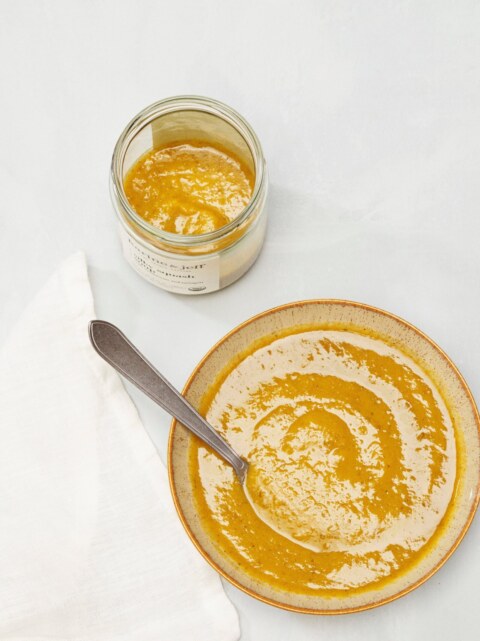
A butternut squash risotto is creamy rice that spreads gently across the plate, golden cubes of butternut and a few crisp sage leaves. The vegetable broth, added little by little as the rice cooks, flavours every grain and complements the almost candied sweetness of the squash. Some freshly grated Parmesan, a knob of butter and you have a generous dinner, best enjoyed piping hot.
Butternut squash risotto with Parmesan and sage: the recipe
For this recipe, we use Karine & Jeff Carrot and Fennel Broth. Its vegetable flavours go particularly well with butternut, without masking its delicate taste.
One jar is enough: we top it up with hot water to get the amount of liquid needed for cooking.
Serves 4
Preparation: 15 minutes. Cooking: 25 to 30 minutes. Total time: about 40 to 45 minutes.
Ingredients
- 280 g risotto rice, arborio or carnaroli
- 500 g butternut squash, weighed after peeling
- 1 × 500 ml jar of Karine & Jeff Carrot and Fennel Broth
- 350 to 450 ml hot water, plus a little more if needed
- 1 shallot
- 2 tbsp olive oil
- 30 g butter
- 50 g freshly grated Parmesan
- 6 to 8 fresh sage leaves
- Freshly ground black pepper
- A little salt, if needed
Method
1. Brown the squash
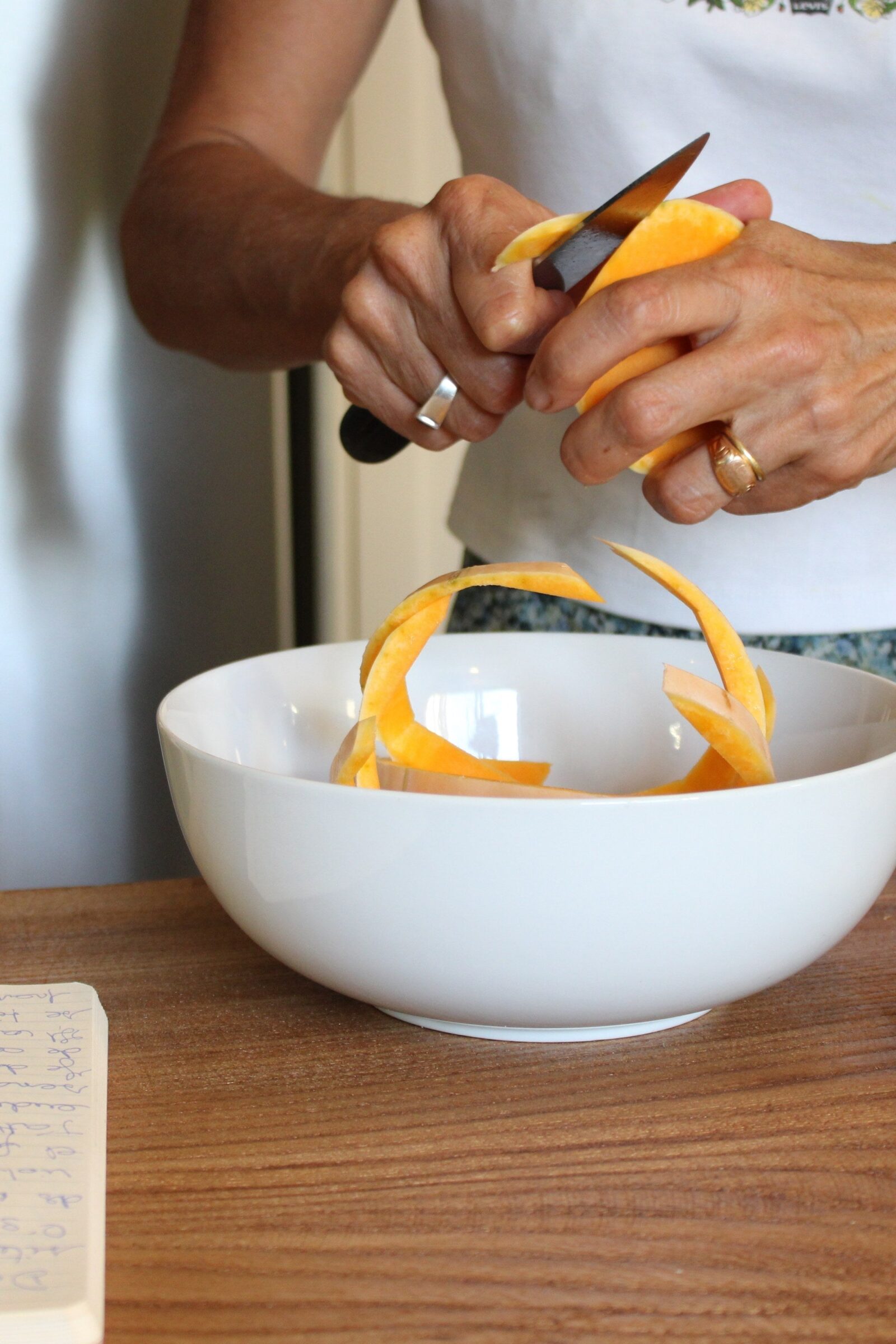
Cut the butternut into even cubes of about 1.5 cm.
Heat a tablespoon of olive oil in a large frying pan and add the squash. Cook over a medium heat for about fifteen minutes, turning it gently.
The pieces should be golden at the edges and tender in the middle. If needed, add two tablespoons of water and cover for a few minutes to finish cooking.
Set aside.
2. Heat the broth
While the squash is cooking, pour the Karine & Jeff broth into a saucepan with 350 ml water.
Keep this mixture hot over a low heat. Keep a little extra hot water close by: depending on the rice, you may need it towards the end of cooking.
3. Toast the rice
Finely chop the shallot and soften it for two to three minutes in a deep sauté pan with the second tablespoon of olive oil.
Add the rice, without rinsing it, and stir for one to two minutes. The grains should turn a little translucent at the edges.
4. Add the broth gradually
Pour a ladleful of hot broth over the rice.
Stir gently. When the liquid is almost absorbed, add another ladleful and carry on like this for about 18 to 22 minutes.
The rice should become tender while keeping a little bite in the centre. If you run short of liquid, add a little hot water.
Five minutes before the end of cooking, stir in two thirds of the squash. Some pieces will break down a little and blend into the rice, giving it a lovely golden colour and even more creaminess.
5. Finish with Parmesan and sage
Take the pan off the heat. Add 20 g of the butter and the grated Parmesan, then stir vigorously.
The risotto should become glossy and creamy. If it is too thick, loosen it with a few spoonfuls of hot water: it should spread gently across the plate rather than sit in a block.
In a small frying pan, heat the remaining 10 g of butter until foaming and add the sage leaves. Let them crisp for a few moments, without burning.
Divide the risotto between four warm plates. Add the rest of the squash, the golden sage and a grind of pepper.
Serve immediately. It is straight from the pan that a risotto reveals all its creaminess.
Two tempting variations on our squash risotto
With mushrooms, for woodland flavours
Replace 200 g of the squash with 200 g button or oyster mushrooms, fried until well browned.
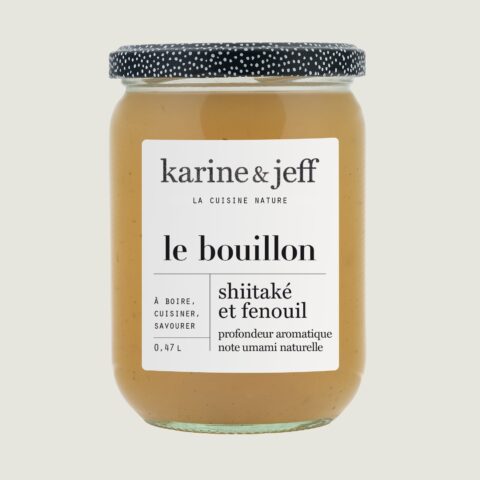
This time, choose Karine & Jeff Shiitake and Fennel Broth: its deep notes go particularly well with mushrooms.
Stir the mushrooms in at the end of cooking and finish with a little freshly chopped flat-leaf parsley.
A courgette risotto for sunny days
In summer, replace the squash with 350 to 400 g courgettes cut into small cubes.
Fry them in olive oil until just golden, then add them to the rice for the last five minutes of cooking.
Finish with fresh basil and a little lemon zest. The Carrot and Fennel Broth works beautifully with this fresher, more fragrant version.
Three frequently asked questions about risotto
What broth is best for risotto?
A fragrant vegetable broth is ideal for a vegetable risotto. With squash, we love the gentle notes of carrot and fennel; with mushrooms, a shiitake broth brings more depth. Either way, use it hot and add it gradually as the rice cooks.
Which squash is best for risotto, and can you use pumpkin?
Butternut is particularly well suited: its flesh turns meltingly soft while holding its shape fairly well. Red kuri squash (often sold in the UK as onion squash) is also delicious, with notes reminiscent of chestnut. You can even mix the two for more varied flavours. For a pumpkin risotto, the same method applies: choose a pumpkin with dense flesh and cut it into the same 1.5 cm cubes.
How do you make a creamy risotto without cream?
The texture comes mainly from the starch in the rice. Choose arborio or carnaroli, don’t rinse it, and add the hot broth ladle by ladle, stirring regularly. At the end, the butter and Parmesan beaten in off the heat give the risotto its gloss and soft texture. Cream simply isn’t needed.
Karine & Jeff broths, at the heart of the recipe
A good risotto starts with a broth whose flavours you love.
The Carrot and Fennel Broth complements the sweetness of vegetables; the Shiitake and Fennel Broth lends itself particularly well to mushrooms and earthier, woodland recipes.
All that’s left is to choose some fine vegetables, take the rice out of the cupboard and enjoy cooking.