How to Make a Cheese Board (and Which Chutney to Serve)
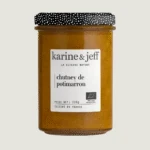
To make a good cheese board, choose three to five cheeses with different textures and characters. Allow 60 to 80 g per person at the end of a meal, and serve them with good bread, a little seasonal fruit and a handful of nuts. Then add two small bowls of chutney: a touch of candied fruit, a hint of acidity or a few spices is all it takes to discover new pairings.
The pleasure of lingering at the table
There is something joyful about a cheese board arriving at the table. The meal could end there, yet nobody really wants to leave. Someone cuts a thin slice of Comté, tears off a piece of bread, hesitates between a creamy goat’s cheese and a well-aged tomme.
Then someone discovers a delicious pairing and passes it to their neighbour to try.
Perhaps that is what we love most about a cheese board: the freedom to discover, compare and share. There is no recipe to follow, only good produce brought together with care.
A successful board doesn’t need to be spectacular, either. A few well-chosen cheeses, two kinds of bread, some fruit and small bowls of chutney can make for a far more interesting tasting than a great heap of everything.
How to choose the cheeses for your cheese board
The secret is to put together a small family in which each cheese brings something different.
- A goat’s cheese, fresh and delicately tangy, or more aged if you like bold flavours.
- A Brie or Camembert, for its melting heart and gentle, milky sweetness.
- A Comté, whose ageing gradually reveals notes of butter, hazelnut and sometimes dried fruit.
- A sheep’s milk tomme, supple or firmer in texture, with aromas that deepen over time.
- And finally a blue, such as Fourme d’Ambert, Bleu d’Auvergne or a good Stilton, for a more intense flavour.
For a small gathering, three or four of these families are plenty. With more guests, five varieties let you create a journey from the mildest flavours to the most powerful.
Chutney for cheese: a little extra indulgence
A cheese is perfectly good on its own. But it can be delicious to give it an unexpected companion.
A chutney usually pairs fruit or vegetables with a touch of acidity and a few spices. It brings sweetness, freshness or contrast to the cheese, the kind that keeps you coming back for more.
At Karine & Jeff, we love this play of pairings, where each ingredient keeps its own character. A small spoonful is enough: the pleasure lies in letting the flavours meet without one drowning out the other.
Cheese board ideas: four pairings to try
Goat’s cheese with apricot and ginger
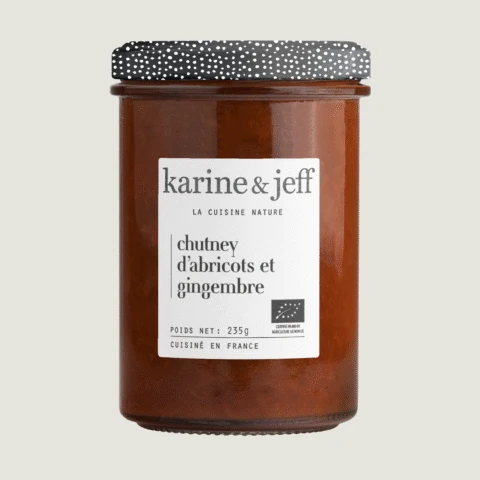
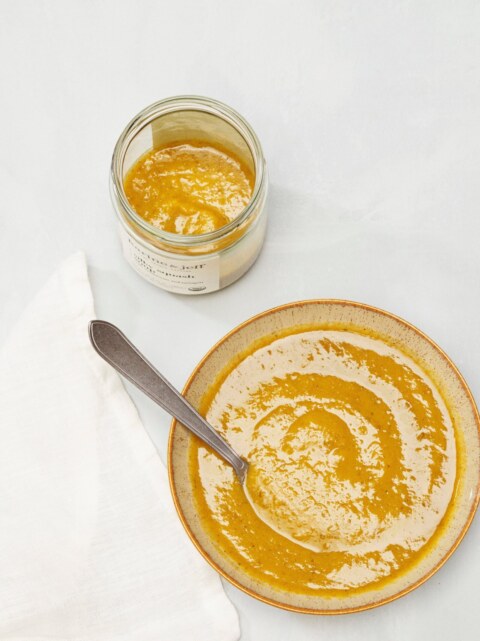
On a small slice of toasted country bread, place a piece of aged goat’s cheese and a dab of our Apricot and Ginger Chutney.
The bread crunches, the cheese softens on the tongue and the ginger carries the flavour on with a lively note.
Comté with red kuri squash
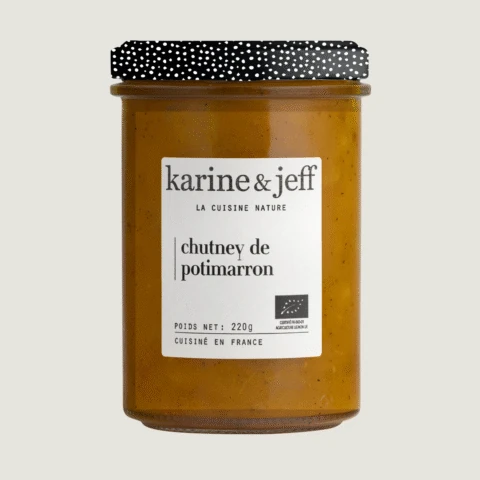
Picture a thin sliver of aged Comté with a little of our Red Kuri Squash Chutney.
Its gentle vegetable sweetness, subtle acidity and peppery hint go hand in hand with the hazelnut notes of the cheese. It is a delicate pairing, where nothing tries to dominate.
Blue cheese with apricot and ginger
Here is a bolder match, and one we are particularly fond of: Fourme d’Ambert, a piece of walnut bread and a touch of Apricot and Ginger Chutney.
The saltiness of the blue finds a counterpoint in the sweetness of the fruit. Then come the ginger and the tangy note of umeboshi (Japanese pickled plum), which wake everything up. Between the melting cheese and the crunchy bread, it is a generous mouthful, full of depth.
Sheep’s milk tomme with gently candied red kuri squash
A fine aged sheep’s milk tomme has a flavour that lingers on the palate.
The Red Kuri Squash Chutney, with its soft texture and delicately spiced notes, brings it an almost enveloping sweetness. Serve the two side by side: everyone can balance the pairing to their taste and take time to discover its nuances.
And what about fig chutney?
Fig chutney is a great classic of the cheese board. Its candied sweetness goes particularly well with blues, some aged goat’s cheeses and sheep’s milk cheeses.
Fig offers a round, generous pairing, whereas apricot and ginger bring more vivacity.
That is the whole point of offering several chutneys on the same board: everyone can discover their favourites, and sometimes find themselves loving a combination they would never have imagined.
The art of arranging a cheese board that looks as good as it tastes
A large wooden board or a ceramic platter is all you need. Place the largest cheeses first, then play with shapes: a small round, a triangular wedge, a thick slice.
Leave some space between each one. The board should invite people to help themselves, without everything being crammed together.
Tuck a few wedges of pear or apple between the cheeses, a small bunch of grapes in season, a few walnuts or hazelnuts. These touches of freshness and crunch are as pleasing to look at as they are to eat.
When it comes to bread, keep it simple: a good country loaf, a crusty baguette and perhaps some walnut bread.
Serve the chutneys in two small bowls, each with its own spoon. Your guests can then build their mouthfuls as they please.
Finally, remember to take the cheeses out of the fridge thirty to sixty minutes before serving, depending on how delicate they are and the temperature of the room. They will express their aromas far better than straight from the cold.
Above all, let the board live in the middle of the table. That is where it looks its best.
Three frequently asked questions about cheese boards
How many cheeses should go on a cheese board?
Three or four cheeses from different families generally suit four to six people. For a larger gathering, you can offer five. Variety and quality matter more than sheer numbers.
Which chutney goes with which cheese?
It all depends on the character of the cheese and the effect you are after: sweetness, freshness or contrast. Fruity chutneys happily partner strong cheeses, while more delicate flavours suit mild ones. The best approach is to serve the chutneys separately and let everyone experiment.
How much cheese per person?
Allow around 60 to 80 g per person if the board comes at the end of a meal. If it is the main event at lunch or dinner, plan on 120 to 150 g per person, with bread, fruit and a few other treats.
Two Karine & Jeff chutneys for your next cheese board
All that remains is to choose a few fine cheeses, slice some bread and set our two chutneys in the middle of the table.
Then the pleasure is in letting everyone create their own pairings, discover their favourites and, perhaps, come back for one last bite.